BR-1001
Muzzle velocity · 10 GHz radars

BR-1001 Doppler Radar

A bistatic Doppler radar for muzzle velocity and short-to-medium range velocity measurement.

23 dBiAntenna gain
10.525 GHz nominalOperating frequency
30 to 3,000 m/s standard; up to 10,000 m/s optionalRadial velocity coverage
Overview

BR-1001 Doppler Radar

The BR-1001 Doppler radar antenna is designed for muzzle velocity and short-to-medium range velocity measurement, on projectiles from 5.56 mm to 155 mm.

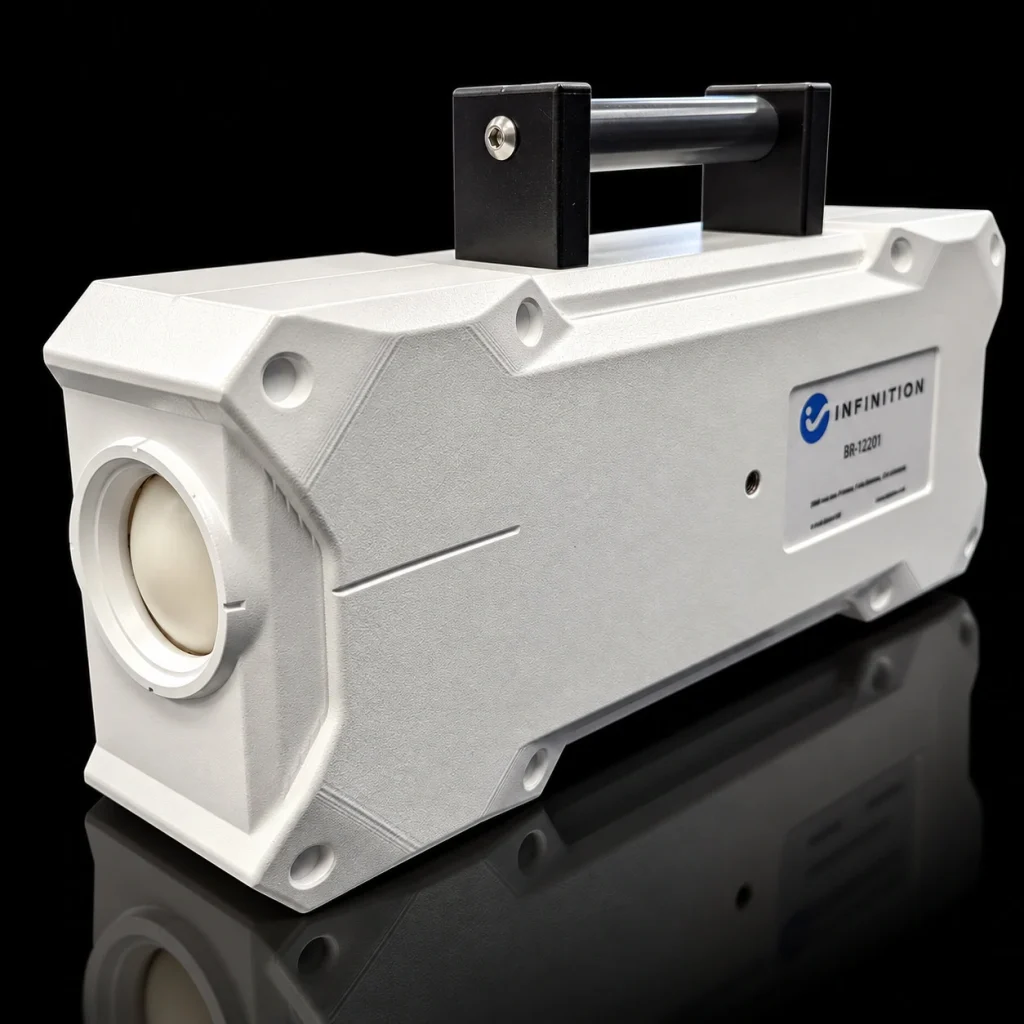
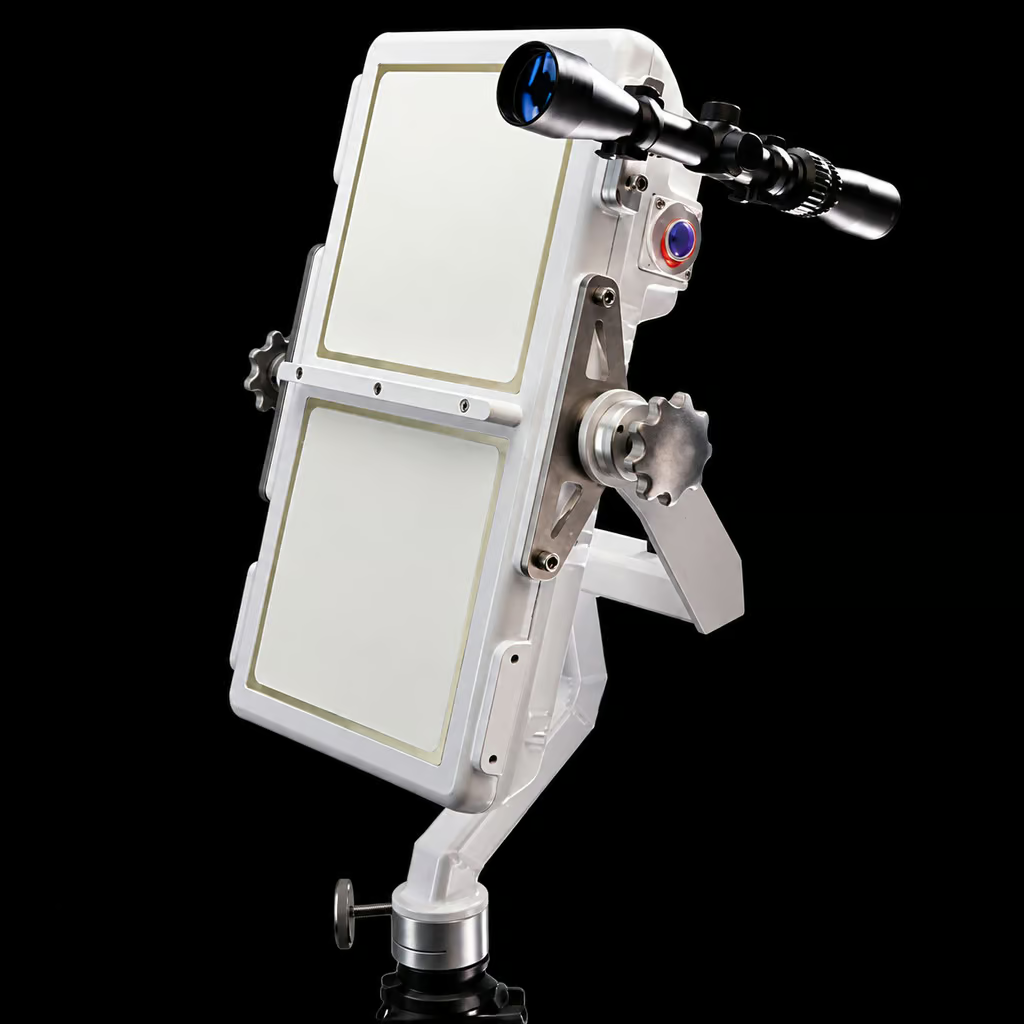
Its transmitting and receiving antennas operate in a bistatic configuration. The magnesium-cast housing provides rigidity while minimizing weight, and the sealed enclosure protects the electronics from dust and water.

For range teams measuring muzzle velocity and short-to-medium downrange velocity with a compact X-band radar and the standard Infinition acquisition chain.

Images

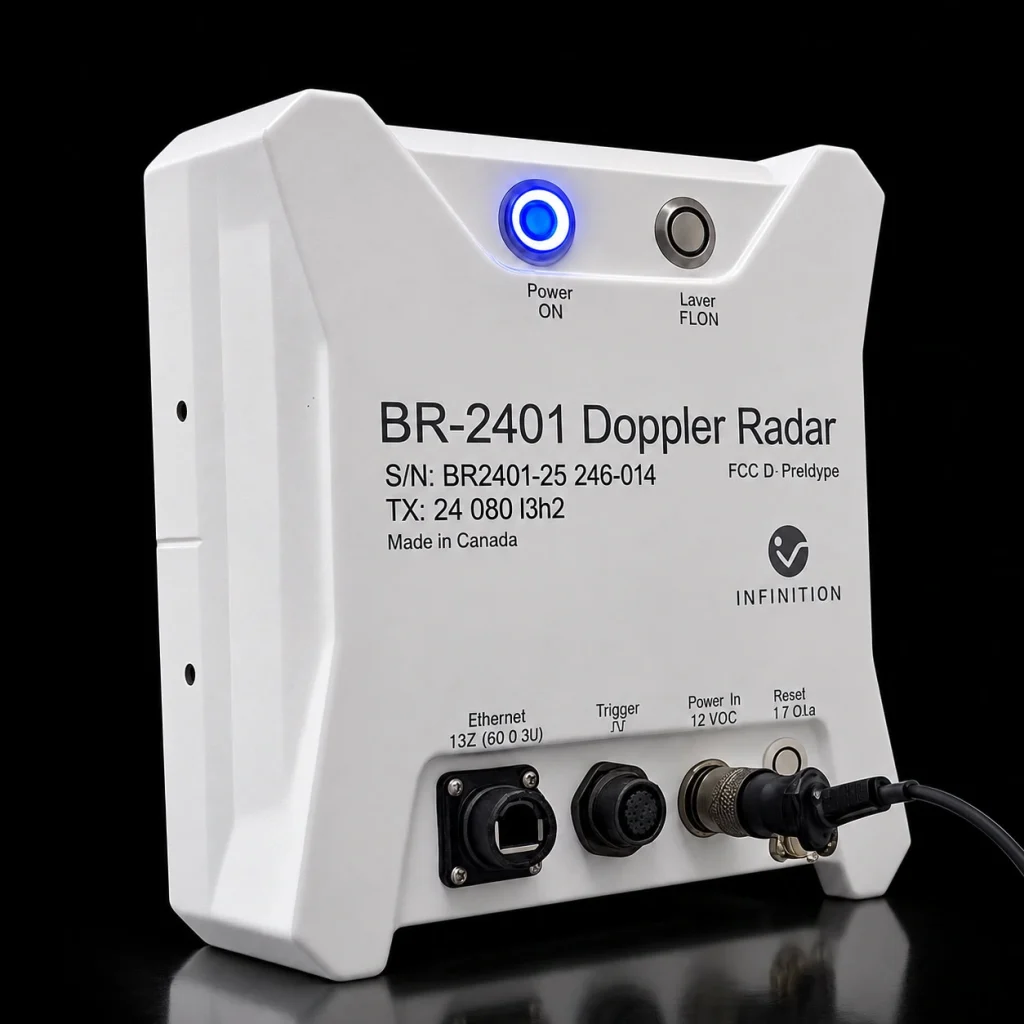
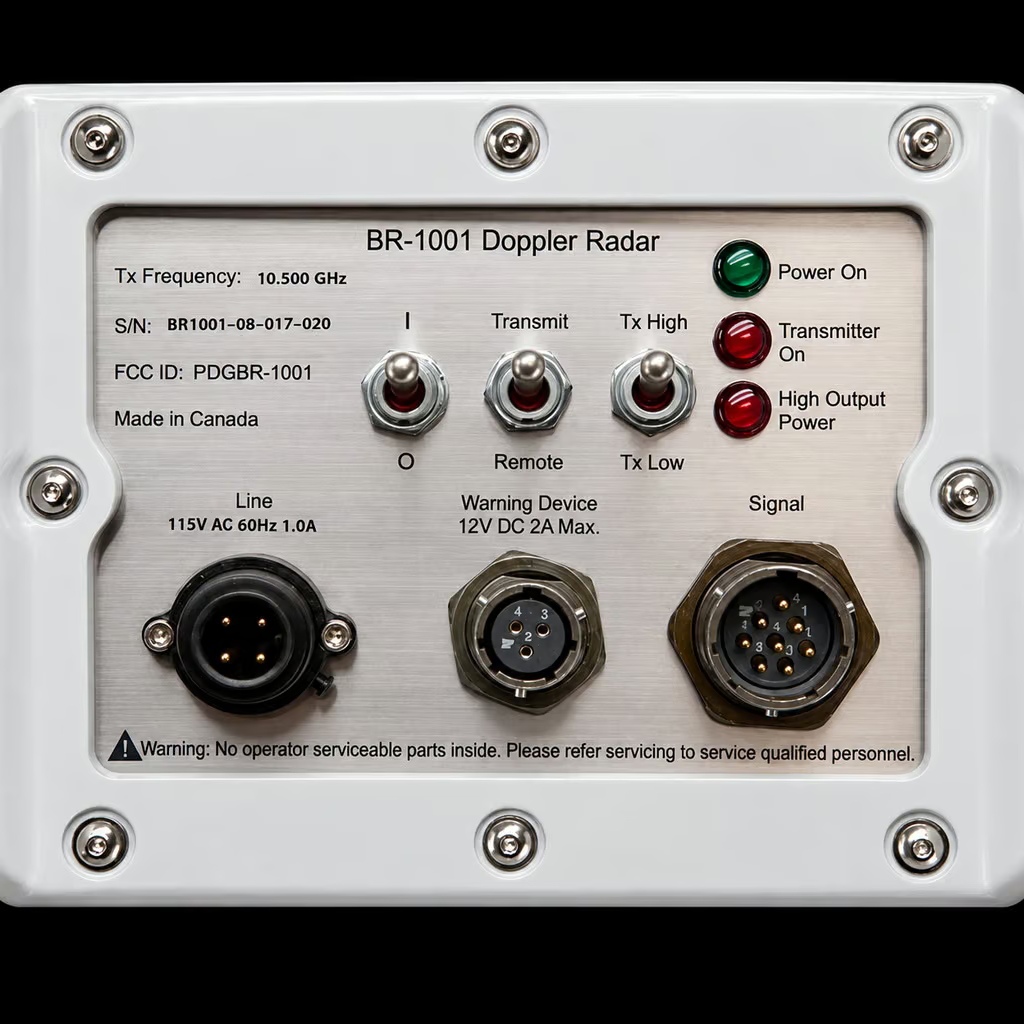
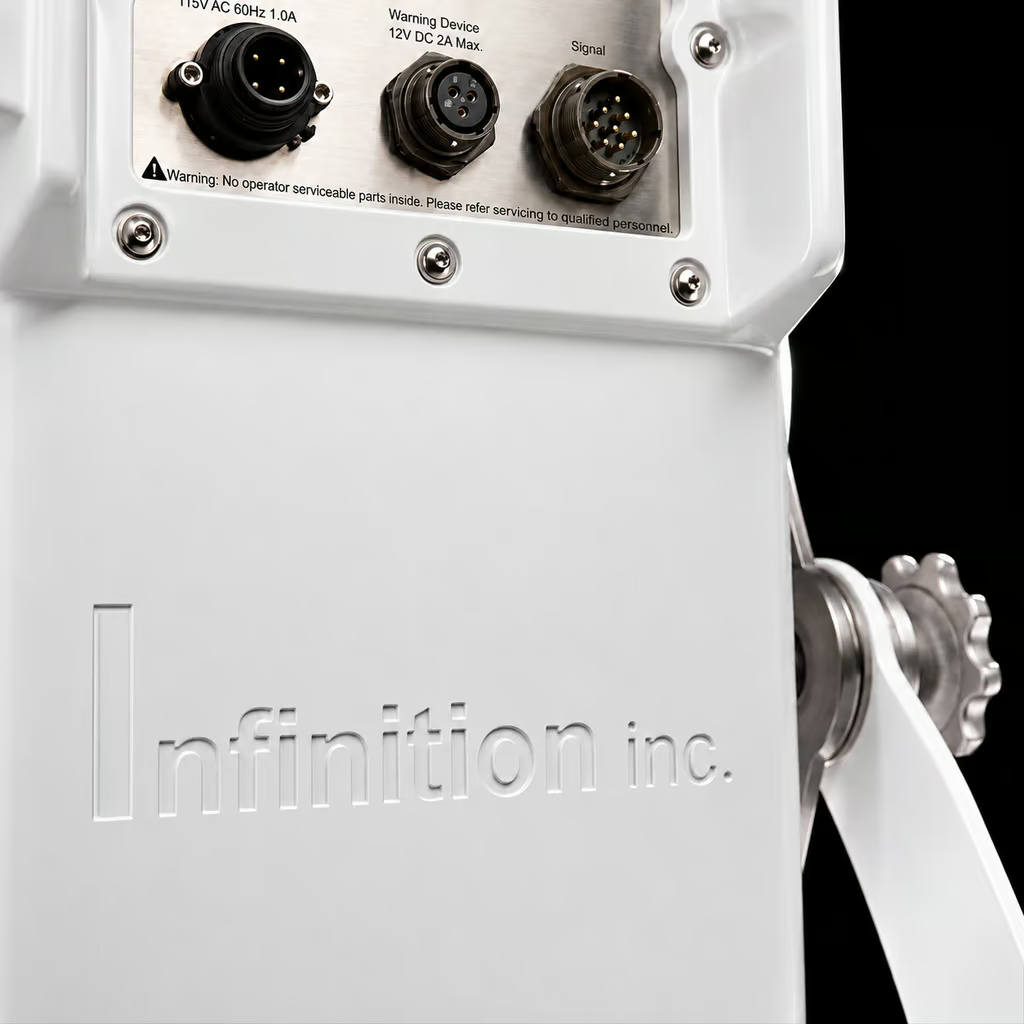
BR-1001 in detail.

Performance & specifications

Technical facts.

DatasheetNo document available at the moment
Radar
Antenna gain23 dBi
Antenna typeFlat-panel microstrip
Beamwidth (vertical × horizontal)11° × 9°
PolarizationVertical; horizontal optional
Transmitter output power0.2 W or 2 W, selectable
Transmitter sourcePhase-locked DRO, CW
Phase noise−110 dBc/Hz at 10 kHz offset
ModulationNone
Operating frequency10.525 GHz nominal
Humidity0 % to 100 % relative humidity, operating and storage
Performance
Velocity measurement accuracy± 0.05 %
System precision± 0.1 %
Receiver noise figure< 1.8 dB
Radial velocity coverage30 to 3,000 m/s standard; up to 10,000 m/s optional
Physical & power
Operating temperature−20 °C to +55 °C
Storage temperature−30 °C to +55 °C (in the supplied transport case)
Power supply115 VAC, 60 Hz, 1.0 A or 230 VAC, 50 Hz, 0.5 A
Dimensions51 cm × 27 cm × 13 cm
Weight14 kg
ApprovalsCE, FCC
Range performance
5.56 mm (−50 dBsm RCS)250 m typical / 300 m maximum
7.62 mm (−45 dBsm RCS)350 m typical / 420 m maximum
12.7 mm (−36 dBsm RCS)580 m typical / 700 m maximum
20 mm (−28 dBsm RCS)920 m typical / 1,100 m maximum
30 mm (−21 dBsm RCS)1,350 m typical / 1,650 m maximum
40 mm (−16 dBsm RCS)1,850 m typical / 2,200 m maximum
105 mm (−14 dBsm RCS)> 2,400 m typical / 3,400 m maximum
155 mm (−11 dBsm RCS)> 2,800 m typical / 4,000 m maximum
Operating notes
  1. Selectable transmitter output (0.2 W or 2 W) supports both short- and long-range measurement, and the low receiver noise figure maximizes sensitivity and detection range.
  2. The radar is painted white to reduce sensitivity to solar heat.
  3. Typical range is computed with an FFT size of 1024 and maximum range with an FFT size of 2048, both with a 10 dB minimum signal-to-noise ratio, in 2 W transmit mode, at 10.525 GHz and assuming a flat trajectory with the radar viewing the projectile base. For the 5.56 mm, Infinition uses a conservative RCS of −50 dBsm; with the −47 dBsm NATO reference value, 5.56 mm ranges are about 20 % longer.
  4. Values marked “>” are deliberately limited: at long range the projectile is no longer seen from its base, its radar cross section falls below the calculated value, and the published range is capped accordingly. These are calculated sensitivity limits, not guaranteed values: actual performance varies with projectile shape and material, trajectory profile, radar alignment and test conditions.
Measurement chain

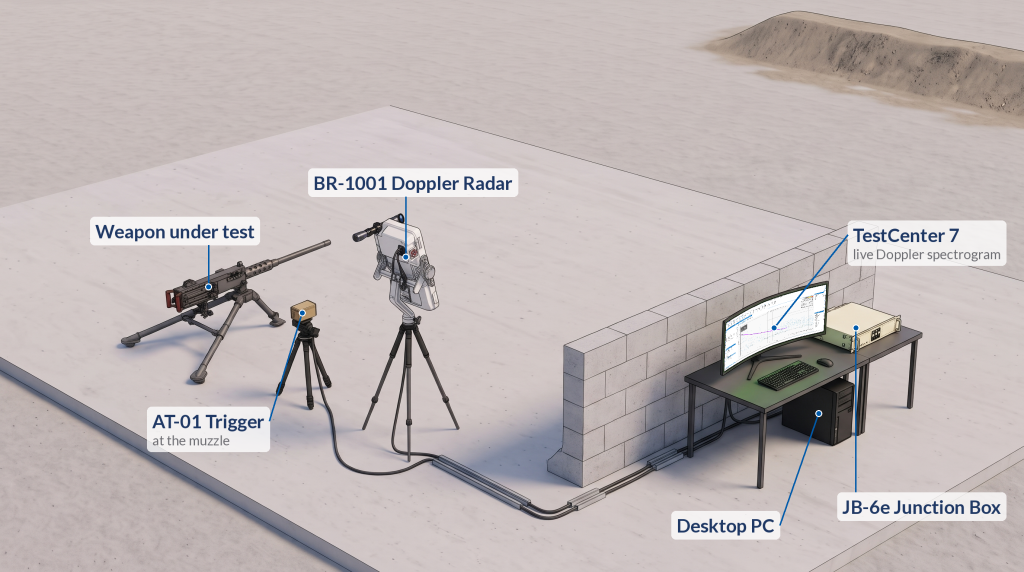
Complete the measurement chain.

Identify the system role, then request the configuration appropriate to the range, projectile, acquisition, and analysis conditions.
Infinition junction box
TestCenter Doppler processing software
Product documents

Downloads.

Technical brochures and product documents for configuration and review.
PDFNo document available at the momentBR-1001 · Contact us to receive the documentationRequest
Related

Other products in this category.

Explore related Infinition systems designed for the same measurement condition.